Al Elm Quran Academy

Uncategorized

Who Are the Ahlul Baytsa
Uncategorized

Who Are the Ahlul Bayt (AS)?

Who Are the Ahlul Bayt (AS)? In Shia Islam, the Ahlul Bayt (AS) are the purified household of Prophet Muhammad (S): Imam Ali (AS), Sayyida Fatima al-Zahra (SA), Imam Hasan (AS), and Imam Husayn (AS), gathered with the Prophet as the People of the Cloak, together with the Twelve Imams. Key Takeaways The Ahlul Bayt are the purified family of the Prophet (S). They are also called Ahl al-Kisa, the People of the Cloak. The core five are the Prophet, Imam Ali, Fatima, Hasan, and Husayn (peace be upon them). In Shia belief, the Ahlul Bayt extends to the Twelve Imams. The Verse of Purification (33:33) affirms their purity. The Prophet tied them to the Quran in the Hadith al-Thaqalayn. Who Are the Ahlul Bayt (AS)? Ahlul Bayt means the people of the house. In Shia Islam the term refers to the Prophet’s purified household, not to every relative. It centres on the five gathered under the cloak, the Prophet (S), Imam Ali (AS), Sayyida Fatima (SA), Imam Hasan (AS), and Imam Husayn (AS), and extends to the Imams from the line of Ali and Fatima. To learn each of their blessed names and roles, see our guide to the fourteen Masoomeen. The Event of the Cloak (Hadith al-Kisa) The Prophet (S) gathered Imam Ali, Sayyida Fatima, Imam Hasan, and Imam Husayn under his cloak and prayed that Allah remove every impurity from them and purify them completely. Because of this event they became known as Ahl al-Kisa, the People of the Cloak. This account is reported in both Shia and Sunni sources. The Verse of Purification (33:33) The closing part of Surah Al-Ahzab (33:33), known as Ayat al-Tatheer, states Allah’s wish to remove all impurity from the people of the house and to purify them completely. Shia scholars read this verse as clear evidence of the purity and infallibility (ismah) of the Ahlul Bayt, which is why their guidance can be trusted without doubt. Who Belongs to the Ahlul Bayt? Member Relation to the Prophet (S) Title Imam Ali (AS) Cousin and son-in-law First Imam, Amir al-Muminin Fatima al-Zahra (SA) Daughter Leader of the women of the worlds Imam Hasan (AS) Grandson Second Imam Imam Husayn (AS) Grandson Third Imam Nine Imams from Husayn’s line Descendants Fourth to Twelfth Imams The Twelve Imams Shia Muslims hold that leadership and guidance continued through twelve divinely appointed Imams, beginning with Imam Ali (AS) and ending with Imam al-Mahdi (AJ). Along with the Prophet (S) and Sayyida Fatima (SA), they form the fourteen Masoomeen, the fourteen infallibles. You can read their full list in our guide to the names of the fourteen Masoomeen. Help your family build a lasting bond with the Ahlul Bayt. Book a Free Trial Class Why the Ahlul Bayt Matter The Prophet (S) did not only honour his family, he tied them to the Quran itself in the Hadith al-Thaqalayn, naming the Book of Allah and his Ahlul Bayt as two weighty things left for the ummah. Their teachings reach us today through works such as Nahj al-Balagha and the wider field of Hadith studies. Frequently Asked Questions Who are the Ahlul Bayt in Shia Islam? The Prophet (S), Imam Ali, Fatima, Hasan, Husayn, and the Twelve Imams (peace be upon them). What does Ahl al-Kisa mean? It means the People of the Cloak, from the event when the Prophet gathered the five under his cloak. Which verse mentions the Ahlul Bayt? The Verse of Purification, Surah Al-Ahzab 33:33. Are the wives of the Prophet part of the Ahlul Bayt? In Shia understanding, the Verse of Purification refers to the five of the cloak and the Imams from their line. How many are the Masoomeen? Fourteen: the Prophet, Sayyida Fatima, and the Twelve Imams. Learn About the Ahlul Bayt With Al Elm Quran Academy Al Elm Quran Academy is an online academy that helps Shia students and families across the world connect with the Quran and the Ahlul Bayt (AS). Through our Dua and Ziyarat, Nahj al-Balagha, and Hadith studies classes, our teachers nurture both knowledge and love for the household of the Prophet (S). Start today, book your free trial class or explore all our courses. Shabbir Hussain Co-Founder, Alelm Quran Academy Qualifications MPhil in Islamic Studies, University of Karachi Traditional Hawza Studies, Hawza Imam Khomeini Areas of Expertise Quranic Studies Hadith Studies Islamic History Islamic Jurisprudence (Fiqh) Islamic Theology (Kalam) About the Author Shabbir Hussain is an Islamic scholar, educator, researcher, Qari, and public speaker. He serves as the Co-Founder of Alelm Quran Academy, where he is actively involved in teaching, curriculum development, and educational outreach. He holds an MPhil in Islamic Studies from the University of Karachi and has completed traditional Hawza studies at Hawza Imam Khomeini. With years of experience in Islamic education, he specializes in Quranic studies, Hadith, Islamic history, Fiqh, and Kalam. Through teaching, research, public speaking, and educational writing, he is dedicated to making authentic Islamic knowledge accessible and relevant to students worldwide. His work aims to bridge classical Islamic scholarship with the educational needs of contemporary learners.

Lessons From the Life of Imam Ali AS
Uncategorized

Lessons From the Life of Imam Ali (AS)

Lessons From the Life of Imam Ali (AS) The life of Imam Ali ibn Abi Talib is one of the most influential examples of faith, knowledge, justice, and courage in Islamic history. He was the first Shia Imam, the cousin and son-in-law of Prophet Muhammad, and a lifelong defender of Islam. Born inside the Holy Kaaba and martyred in the mosque of Kufa, his life reflects a complete model of spiritual excellence and moral leadership. Key Takeaways Imam Ali (AS) is the first Imam in Shia Islam. He was born inside the Kaaba, a distinction held by no one else. He was the first youth to accept Islam and never worshiped idols. He married Sayyida Fatima (SA); their sons are Imam Hasan and Imam Husayn (AS). His words are collected in Nahj al-Balagha, the Peak of Eloquence. He was martyred on the 21st of Ramadan, 40 AH in Kufa, and is buried in Najaf. Who Was Imam Ali (AS)? Imam Ali (AS) was born on the 13th of Rajab inside the Holy Kaaba, the son of Abu Talib and Fatima bint Asad. He was raised in the home of the Prophet (S) from a young age, learning directly from his character and conduct. Among his many titles are Amir al-Muminin (Commander of the Faithful) and Abu Turab. A Life Beside the Prophet (S) Imam Ali was the first youth to accept Islam and never bowed to an idol. On the night of the migration, he slept in the Prophet’s bed to protect his life, an event known as Laylat al-Mabit. He carried the standard in the battles of Badr, Uhud, Khandaq, and Khaybar. At Ghadir Khumm, the Prophet declared that for whomever he is the leader, Ali is also his leader, a moment Shia Muslims see as the appointment of Imam Ali as his successor. مَنْ کُنْتُ مَوْلَاهُ فَعَلِيٌّ مَوْلَاهُ “For whomever I am his leader, Ali is also his leader.” Lessons From the Life of Imam Ali (AS) 1. The Value of Knowledge Imam Ali taught that no honour is like knowledge. He urged people to learn, to ask, and to think, and he is remembered as a gateway to the knowledge of the Prophet (S). العِلْمُ خَيْرٌ مِنَ الْمَالِ، الْعِلْمُ يَحْرُسُكَ وَأَنْتَ تَحْرُسُ الْمَالَ “Knowledge is better than wealth; knowledge protects you, while you protect wealth.” 2. Justice and Fairness As caliph, with Kufa as his capital, he treated rich and poor as equals and refused to bend justice for anyone, even when it cost him politically. الْعَدْلُ يَضَعُ الْأُمُورَ مَوَاضِعَهَا “Justice places things in their proper places.” 3. Courage With Humility He was the bravest in battle, yet he lived simply, mended his own sandals, and cared for orphans and the needy with his own hands. 4. Sincerity in Worship His devotion in prayer was complete, and he worshiped Allah out of love and gratitude, not out of fear of punishment or hope of reward alone. 5. Patience Through Hardship After the passing of the Prophet (S), he showed great patience for the sake of the unity of the Muslims, choosing the wellbeing of the ummah over personal claim. الصَّبْرُ مِنَ الْإِيمَانِ بِمَنْزِلَةِ الرَّأْسِ مِنَ الْجَسَدِ “Patience is to faith what the head is to the body.” Key Milestones in Imam Ali’s Life Event Detail Birth 13 Rajab, inside the Kaaba Parents Abu Talib and Fatima bint Asad Marriage To Sayyida Fatima al-Zahra (SA) Famous declaration Ghadir Khumm Major work Nahj al-Balagha Capital as caliph Kufa Martyrdom 21 Ramadan, 40 AH Resting place Najaf, Iraq Study the timeless wisdom of Imam Ali (AS) in his own words. Book a Free Trial Class Why His Words Still Matter Imam Ali’s sermons, letters, and sayings in Nahj al-Balagha are studied for their guidance on ethics, leadership, and spirituality, and they have been admired far beyond Muslim circles. Learning them with a teacher, alongside Hadith studies, brings their meaning to life. Frequently Asked Questions Who was Imam Ali (AS)? The first Shia Imam and the cousin and son-in-law of the Prophet (S). Where was Imam Ali born? Inside the Holy Kaaba in Mecca. What is Nahj al-Balagha? A famous collection of Imam Ali’s sermons, letters, and sayings, known as the Peak of Eloquence. When was Imam Ali martyred? On the 21st of Ramadan, 40 AH, after being struck while praying in the mosque of Kufa. Where is Imam Ali buried? In Najaf, Iraq, the site of one of the holiest Shia shrines. Learn With Al Elm Quran Academy Al Elm Quran Academy helps Shia students and families worldwide grow closer to the Quran and the Ahlul Bayt (AS). Through Nahj al-Balagha, Dua and Ziyarat, and our guide to the fourteen Masoomeen, our teachers share the life and wisdom of Imam Ali in a way the whole family can follow. Begin today, book your free trial class or view our courses.

The Importance of the Ahlul Bayt AS
Uncategorized

The Importance of the Ahlul Bayt (AS)

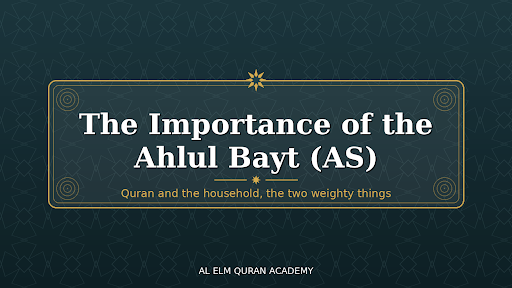
The Importance of the Ahlul Bayt (AS) The Ahlul Bayt (AS) are central to Islam as the purified family of the Prophet (S). In the Hadith al-Thaqalayn, he left two weighty things, the Quran and his Ahlul Bayt, and said that those who hold to both will never go astray after him. Key Takeaways The Ahlul Bayt are the divinely purified household of the Prophet (S). In the Hadith al-Thaqalayn, the Prophet paired them with the Quran. Holding to both the Quran and the Ahlul Bayt is a safeguard from misguidance. The Verse of Purification (33:33) affirms their purity. The Quran asks believers to love the Prophet’s near family (42:23). They are a trusted source of knowledge and guidance for the ummah. Why Are the Ahlul Bayt So Important? The Ahlul Bayt are not honoured only because of their noble lineage. They were chosen and purified to preserve and explain the message of Islam after the Prophet (S). He drew attention to them again and again, so that the ummah would always have a trustworthy guide alongside the Quran. If you are new to who they are, begin with our guide to the fourteen Masoomeen. The Hadith al-Thaqalayn (The Two Weighty Things) Among the most well-known traditions narrated in both Shia and Sunni collections is the Hadith al-Thaqalayn. The Prophet Muhammad (ﷺ) said: إِنِّي تَارِكٌ فِيكُمُ الثَّقَلَيْنِ: كِتَابَ اللّٰهِ وَعِتْرَتِي أَهْلَ بَيْتِي، مَا إِنْ تَمَسَّكْتُمْ بِهِمَا لَنْ تَضِلُّوا بَعْدِي أَبَدًا، وَإِنَّهُمَا لَنْ يَفْتَرِقَا حَتَّى يَرِدَا عَلَيَّ الْحَوْضَ “I am leaving among you two weighty things: the Book of Allah and my family, my Ahlul Bayt. If you hold firmly to both of them, you will never go astray after me. They will never separate until they return to me at the Fountain (Hawd).” This hadith highlights the inseparable relationship between the Quran and the Ahlul Bayt as sources of guidance for the Muslim community. The Verse of Purification (Ayat al-Tathir) and Infallibility One of the most important Quranic verses concerning the Ahlul Bayt is the Verse of Purification. Allah says: إِنَّمَا يُرِيدُ اللّٰهُ لِيُذْهِبَ عَنكُمُ الرِّجْسَ أَهْلَ الْبَيْتِ وَيُطَهِّرَكُمْ تَطْهِيرًا “Indeed, Allah only desires to remove all impurity from you, O People of the House, and to purify you with a thorough purification.” — Quran (33:33) Shia scholars understand this verse as evidence of the special purity (‘Ismah) granted to the Ahlul Bayt (AS), making them trustworthy guides in matters of faith and practice. The Command to Love the Ahlul Bayt In the Verse of Mawadda, Surah Ash-Shura (42:23): قُل لَّا أَسْأَلُكُمْ عَلَيْهِ أَجْرًا إِلَّا الْمَوَدَّةَ فِي الْقُرْبَىٰ “Say: I ask of you no reward for it except love for my near kin.” — Quran (42:23) The Prophet (S) is told to say that he asks for no reward except love for his near kin. Reports explain that this near family refers to Imam Ali, Sayyida Fatima, Imam Hasan, and Imam Husayn (peace be upon them), making love for the Ahlul Bayt a part of faith itself. What the Ahlul Bayt Give the Ummah Role Benefit to Believers Guides alongside the Quran Protection from misguidance (Hadith al-Thaqalayn) Purified examples A living model of taqwa and good character Teachers of knowledge Authentic understanding of the faith Preservers of the Sunnah Reliable transmission of the Prophet’s way A source of unity A shared love that brings hearts together Bring the love and teachings of the Ahlul Bayt into your home. Book a Free Trial Class How to Follow the Ahlul Bayt Today Learn their names and lives through the fourteen Masoomeen guide. Study their words in Nahj al-Balagha and Hadith studies. Recite their duas and ziyarat with understanding. Teach children the basics through Islamic Essentials (Deenyat). Honor them through manqabat and noha in the family. Frequently Asked Questions Why are the Ahlul Bayt important in Islam? The Prophet paired them with the Quran as guides, and holding to both protects believers from misguidance. What is the Hadith al-Thaqalayn? It is the Prophet’s saying that he left two weighty things, the Quran and his Ahlul Bayt. Which verse shows their purity? The Verse of Purification, Surah Al-Ahzab 33:33. Does the Quran ask us to love them? Yes. The Verse of Mawadda (42:23) mentions love for the Prophet’s near family. How can I learn more about them? Study their names, lives, and teachings, and recite their duas and ziyarat with understanding. Learn With Al Elm Quran Academy Al Elm Quran Academy is an online academy for Shia students and families around the world. Our Dua and Ziyarat, Nahj al-Balagha, and Hadith studies classes are designed to deepen both knowledge of, and love for, the Ahlul Bayt (AS), with flexible one-to-one lessons. Start your journey today, book a free trial class or explore our courses. Shabbir Hussain Co-Founder, Alelm Quran Academy Qualifications MPhil in Islamic Studies, University of Karachi Traditional Hawza Studies, Hawza Imam Khomeini Areas of Expertise Quranic Studies Hadith Studies Islamic History Islamic Jurisprudence (Fiqh) Islamic Theology (Kalam) About the Author Shabbir Hussain is an Islamic scholar, educator, researcher, Qari, and public speaker. He serves as the Co-Founder of Alelm Quran Academy, where he is actively involved in teaching, curriculum development, and educational outreach. He holds an MPhil in Islamic Studies from the University of Karachi and has completed traditional Hawza studies at Hawza Imam Khomeini. With years of experience in Islamic education, he specializes in Quranic studies, Hadith, Islamic history, Fiqh, and Kalam. Through teaching, research, public speaking, and educational writing, he is dedicated to making authentic Islamic knowledge accessible and relevant to students worldwide. His work aims to bridge classical Islamic scholarship with the educational needs of contemporary learners.

ChatGPT Image Jun 22 2026 11 10 15 AM
Uncategorized

Names of Fourteen Masoomeen in Islam

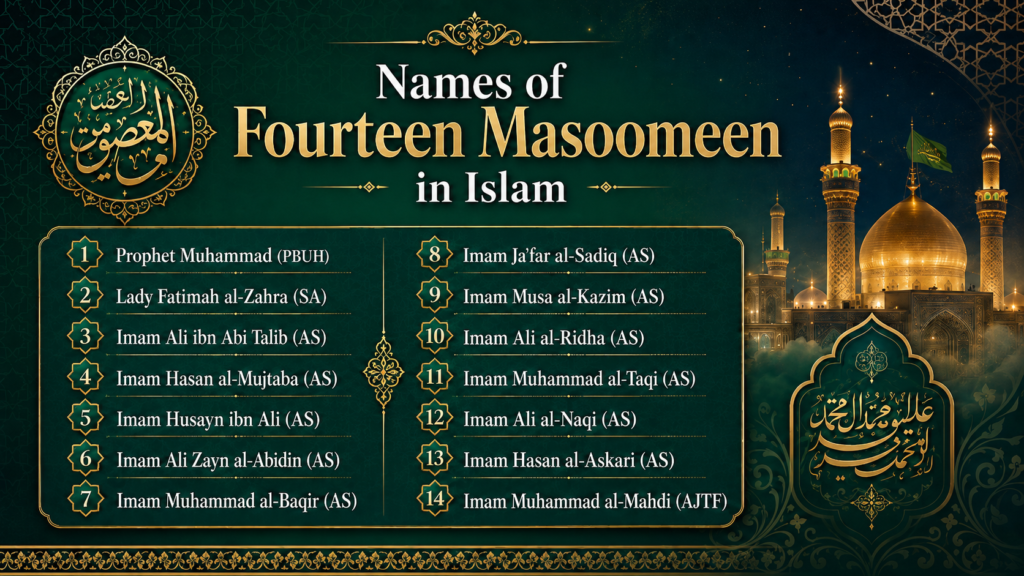
Names of Fourteen Masoomeen in Islam Islam is a religion of guidance, mercy, and knowledge. Allah Almighty selected special pure personalities to guide humanity toward the right path. Among these blessed personalities are the Fourteen Masoomeen, who are known for their purity, truthfulness, and perfect obedience to Allah. Understanding the names of Fourteen Masoomeen is an important part of Islamic education, especially for students who want to learn about the Ahlul Bayt (a.s.). Who are the Fourteen Masoomeen? The word “Masoomeen” means those who are protected from sin and error. In Islamic belief, the Fourteen Masoomeen are the most pure and chosen servants of Allah who guided humanity with truth and justice. They include: Prophet Muhammad ﷺ Lady Fatimah Zahra (a.s.) Twelve Imams (a.s.) These personalities are respected for their knowledge, character, and leadership in Islam. Names of the Fourteen Masoomeen Below are the names of Fourteen Masoomeen in Islam in order: 1. Prophet Muhammad ﷺ The last Prophet of Allah and the final messenger for all humanity. 2. Bibi Fatimah Zahra (a.s.) The beloved daughter of Prophet Muhammad ﷺ and a symbol of purity and patience. The Twelve Imams (a.s.) 3. Imam Ali ibn Abi Talib (a.s.) The first Imam, cousin and son-in-law of Prophet Muhammad ﷺ. 4. Imam Hasan ibn Ali (a.s.) The second Imam, known for his kindness and peace. 5. Imam Hussain ibn Ali (a.s.) The third Imam, known for his sacrifice in Karbala. 6. Imam Ali Zain-ul-Abideen (a.s.) Known for worship and prayers after the tragedy of Karbala. 7. Imam Muhammad al-Baqir (a.s.) Famous for spreading Islamic knowledge and teachings. 8. Imam Jafar al-Sadiq (a.s.) A great scholar who taught many students in Islamic sciences. 9. Imam Musa al-Kazim (a.s.) Known for patience, forgiveness, and worship. 10. Imam Ali al-Ridha (a.s.) Known for knowledge, leadership, and kindness. 11. Imam Muhammad al-Taqi (a.s.) Known for wisdom at a young age. 12. Imam Ali al-Naqi (a.s.) Known for teaching and guiding people in difficult times. 13. Imam Hasan al-Askari (a.s.) Known for patience and spiritual guidance. 14. Imam Muhammad al-Mahdi (a.s.) The last Imam, who is in occultation and will reappear with justice. Why are the Fourteen Masoomeen Important? The Fourteen Masoomeen are important because they: Teach true Islam Show perfect character and morals Guide humanity toward Allah Represent justice and truth Protect the message of Islam Their lives are examples for all Muslims to follow. Teaching Children About the Fourteen Masoomeen Parents and teachers can help children learn about these holy personalities through: Islamic stories and storytelling Simple quizzes and activities Short Islamic lessons Flashcards with names Educational videos At Al Elm Quran Academy, students can learn Islamic studies, Quran reading, and basic beliefs in a simple and structured way. Conclusion The names of Fourteen Masoomeen are not just names; they represent guidance, purity, and leadership in Islam. Learning about them helps strengthen faith and builds a strong Islamic foundation for children and adults. May Allah help us follow their teachings and walk on the path of truth.   Zahid Hussain Qualifications MPhil in Islamic Studies, Minhaj University Lahore Traditional Islamic Studies at Jamiatul Kauthar, Pakistan Advanced Hawza Studies in Iran Areas of Expertise Quranic Studies Hadith Studies Nahj al-Balagha Persian Language & Literature Islamic Theology (Kalam) Comparative Religions Islamic Jurisprudence (Fiqh) About the Author Zahid Hussain is an Islamic scholar, educator, researcher, and public speaker. He holds an MPhil in Islamic Studies from Minhaj University Lahore and has pursued traditional Islamic studies at Jamiatul Kauthar, Pakistan, as well as advanced Hawza studies in Iran. His areas of expertise include Quranic studies, Hadith, Nahj al-Balagha, Persian language, Islamic theology, and comparative religions. He has also received training in Islamic oratory and regularly delivers lectures, sermons, and majalis. Through his teaching, research, and writing, he is committed to promoting authentic Islamic knowledge and intellectual engagement with Islamic scholarship.
Professional desktop or promotional marketing graphic banner for online Quran learning programs.
Uncategorized

کیا دنیا میں ظلم کا ہونا خدا کے نہ ہونے کی دلیل ہے؟ (غزہ کے تناظر میں)

کیا دنیا میں ظلم کا ہونا خدا کے نہ ہونے کی دلیل ہے؟ (غزہ کے تناظر میں) غزہ میں ہونے والے مظالم کے بعد یہ سوال کیوں اٹھتا ہے کہ اگر خدا ہے تو ظلم کیوں؟ قرآن اور اسلام کی روشنی میں اس کا عقلی اور دینی جواب۔  کیا دنیا میں ظلم کا ہونا خدا کے نہ ہونے کی دلیل ہے؟ آج جب ہم غزہ اور فلسطین میں ہونے والے مظالم، قتل و غارت اور بے گناہوں کی چیخیں دیکھتے ہیں تو دل سے ایک سوال ابھرتا ہے:اگر خدا واقعی موجود ہے تو یہ سب کیوں ہو رہا ہے؟ کیا خدا دیکھ نہیں رہا؟یہ سوال نیا نہیں، بلکہ تاریخ کے ہر دور میں مظلوم انسانوں کے دل میں اٹھتا رہا ہے۔ اسلامی نقطۂ نظر — دنیا دارالامتحان ہےاسلام اس سوال کا بنیادی جواب یہ دیتا ہے کہ یہ دنیا آزمائش کی جگہ ہے۔ اللہ تعالیٰ نے انسان کو عقل، اختیار اور آزادی دی ہے۔ انسان چاہے تو عدل قائم کرے اور چاہے تو ظلم۔اگر اللہ ہر ظلم کو فوراً روک دے تو انسان کا اختیار، امتحان اور اخلاقی ذمہ داری ختم ہو جائے۔ پھر نہ ظالم کی پہچان ممکن رہے اور نہ مظلوم کے صبر و ایمان کا ظہور۔ ظالم کو مہلت — عدل کی نفی نہیںقرآن مجید واضح کرتا ہے کہ اللہ ظالموں کے اعمال سے غافل نہیں۔ظالم کو دی جانے والی مہلت دراصل اتمامِ حجت ہے، نہ کہ رضامندی۔جب اللہ کی پکڑ آتی ہے تو وہ نہایت سخت ہوتی ہے، اور آخرت میں کوئی طاقت، کوئی ریاست اور کوئی میڈیا ظالم کو بچا نہیں سکے گا۔ مظلوم کے لیے بلندی، ظالم کے لیے انجاماسلامی تعلیمات کے مطابق مظلوم کا صبر، استقامت اور حق پر قائم رہنا اسے اللہ کے نزدیک بلند مقام عطا کرتا ہے، جبکہ ظالم اپنی ہی مہلت کے ذریعے اپنے انجام کو مزید سخت بناتا ہے۔ نتیجہ — ظلم، خدا کے انکار کی دلیل نہیںلہٰذا دنیا میں ظلم کا ہونا خدا کے نہ ہونے کی دلیل نہیں، بلکہ یہ:انسان کے اختیار کی دلیل ہے دنیا کے امتحان ہونے کی دلیل ہے اور آخرت میں کامل عدل کے قائم ہونے کی دلیل ہے اصل انصاف اس دنیا میں نہیں بلکہ آخرت میں مکمل ہوگا۔تحریر: شبیر ساقی Zahid Hussain Qualifications MPhil in Islamic Studies, Minhaj University Lahore Traditional Islamic Studies at Jamiatul Kauthar, Pakistan Advanced Hawza Studies in Iran Areas of Expertise Quranic Studies Hadith Studies Nahj al-Balagha Persian Language & Literature Islamic Theology (Kalam) Comparative Religions Islamic Jurisprudence (Fiqh) About the Author Zahid Hussain is an Islamic scholar, educator, researcher, and public speaker. He holds an MPhil in Islamic Studies from Minhaj University Lahore and has pursued traditional Islamic studies at Jamiatul Kauthar, Pakistan, as well as advanced Hawza studies in Iran. His areas of expertise include Quranic studies, Hadith, Nahj al-Balagha, Persian language, Islamic theology, and comparative religions. He has also received training in Islamic oratory and regularly delivers lectures, sermons, and majalis. Through his teaching, research, and writing, he is committed to promoting authentic Islamic knowledge and intellectual engagement with Islamic scholarship.